

Tennille Landscape Services
Sign up now for summer service and enjoy a lush, beautiful yard all season long!
Get a Free QuoteLandscape Services Tailored for Tennille, Georgia
Expert Lawn Care for Tennille’s Unique Environment
Tennille, Georgia’s climate brings hot, humid summers and mild winters, creating unique challenges for residential lawns. Homeowners in neighborhoods near Sandersville Road or close to the scenic Deepstep Creek often contend with drought stress during peak summer months, while shaded lots from mature oaks in areas like North Tennille can lead to patchy grass and moss growth. Sloped properties near the city’s rolling outskirts are especially prone to soil erosion after heavy rains, making tailored solutions essential for lasting curb appeal. For more information about local resources and community initiatives, visit the official Tennille website.
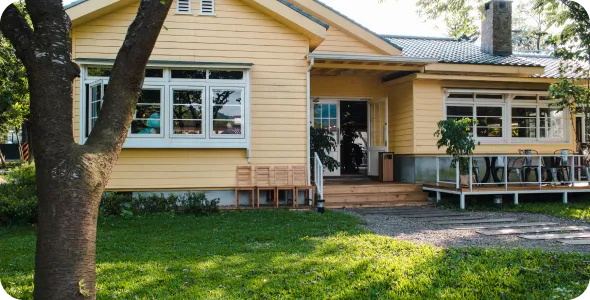
Our Tennille Landscaping & Yard Care Services
Tennille Gardening Services
Tennille Yard Clean Up
Why Choose Tennille Landscape Services

Tennille Homeowners Trust Us
-
Expert Lawn Maintenance
-
Reliable Scheduling
-
Competitive Pricing
-
Professional Team
-
Satisfaction Guarantee
-
Personalized Service
Contact Your Local Tennille Public Works or Solid Waste Department for Green Waste Info
Tennille, located in Washington County in the heart of Middle Georgia, follows municipal guidelines for yard waste disposal that help protect local waterways feeding the Oconee River watershed. Residents should bundle branches under four feet in length and place bagged leaves and grass clippings curbside on designated collection days. Plastic bags are discouraged; biodegradable bags or open containers are preferred. Washington County's convenience center accepts brush, leaves, and organic yard debris with proof of residency. Commercial landscapers must use approved disposal facilities and may not use residential drop-off sites. Storm debris collection is coordinated through Public Works after severe weather events. Blowing or dumping clippings, leaves, sediment, or fertilizer granules into streets, storm drains, ditches, or streams is prohibited under the Clean Water Act and local stormwater programs. Grasscycling—leaving finely mulched clippings on the lawn—reduces waste volume and returns nutrients to Middle Georgia's variable soils.
Tennille City Hall / Public Works
100 Central Avenue, Tennille, GA 31089
Phone: (478) 552-3413
Official Website: City of Tennille
Lawn Care Regulations & Permits in Tennille, GA
All commercial pesticide applicators working in Tennille must hold valid licenses under the Georgia Pesticide Use and Application Act of 1976 and the Georgia Pesticide Control Act of 1976. Verify any applicator's credentials through the Georgia Department of Agriculture - Search for Pesticide Applicators. Fertilizer products sold and applied in Georgia are regulated under the Georgia Fertilizer Act of 1997, though local stormwater ordinances may further restrict application timing near waterways. Tennille follows statewide Georgia Water Conservation rules, including odd/even outdoor watering schedules and time-of-day restrictions prohibiting midday irrigation. Noise ordinances limit powered equipment operation to daytime hours on weekdays and restrict weekend start times. Commercial lawn care operators must maintain a valid occupation tax certificate with the City of Tennille, carry liability insurance, and ensure vehicle and trailer compliance.
Georgia Department of Agriculture
19 Martin Luther King Jr. Drive SW, Atlanta, GA 30334
Phone: (404) 656-3600
Official Website: Georgia Department of Agriculture
What Neighborhoods Do We Serve in Tennille, GA?
Tennille's neighborhoods reflect Middle Georgia's mix of established residential streets, newer developments, and rural-edge properties, each presenting distinct lawn care challenges shaped by the region's transitional soil profile.
- Downtown Tennille / Central Avenue Corridor — Older lots with mature hardwood canopy, compacted clay-loam soils, and limited irrigation. Centipedegrass and bermudagrass dominate, with shade thinning common under large oaks and pecans.
- North Tennille / Highway 15 North Area — Mixed sun-and-shade residential properties on gently rolling terrain. Soils transition between red clay-loam and sandier loam. Bermudagrass thrives in open yards; zoysiagrass performs well in partial shade.
- South Tennille / Railroad District — Flat, lower-elevation lots near the rail corridor with occasional drainage concerns. Compacted fill soils require aeration. Centipedegrass is common in lower-input landscapes.
- East Tennille / Riddleville Road Area — Larger rural-edge lots with sandy-loam soils, pine canopy, and full-sun pasture borders. Bahiagrass and bermudagrass are prevalent; nutrient leaching is a concern in sandier sections.
- West Tennille / Harrison Road Vicinity — Suburban-style properties with mixed soil profiles. Zoysiagrass and bermudagrass perform well. Proximity to small creek drainages requires runoff-conscious fertilizer application.
- Tennille School Zone / Warthen Street Area — Properties near schools and community facilities with moderate foot traffic. Bermudagrass handles wear well; compaction from clay subsoils demands regular core aeration.
Partnering With Tennille's Stormwater, Environmental, or Sustainability Office
Tennille's Public Works coordinates stormwater management in alignment with Georgia EPD - Stormwater and Georgia EPD - Municipal Stormwater programs. Washington County's drainage systems feed the Oconee River basin, making nutrient and sediment runoff prevention essential. Sustainable lawn care practices that protect local water quality include:
- Proper mulching around beds and trees to reduce erosion
- Grasscycling to return nitrogen to Middle Georgia's variable soils
- Compost topdressing to improve organic matter in clay-heavy or sandy areas
- Rain garden installation in low spots to capture stormwater
- Native and adapted plant integration to reduce irrigation demand
- Avoiding fertilizer application before forecasted heavy rain
Coordination with the Georgia Soil and Water Conservation Commission - Urban Erosion & Sediment Control ensures that any land-disturbing lawn renovation activities follow proper sediment control practices.
Georgia Environmental Protection Division
2 Martin Luther King Jr. Drive SE, Suite 1456 East, Atlanta, GA 30334
Phone: (404) 656-4713
Official Website: Georgia Environmental Protection Division
Top Tennille Lawn Problems (and How We Solve Them)
Middle Georgia's long, hot summers and transitional soils create specific turf challenges in Tennille. The most common issues and science-based solutions, guided by UGA Turfgrass research, include:
- Heat and drought stress — Bermudagrass and centipedegrass tolerate Middle Georgia's intense summer heat, but extended dry spells cause wilting. Deep, infrequent irrigation early in the morning improves root depth and resilience.
- Clay compaction and poor infiltration — Piedmont-influenced clay-loam soils in parts of Tennille resist water penetration. Annual core aeration in late spring for warm-season turf breaks compaction and improves drainage.
- Large patch disease — Zoysiagrass and centipedegrass are susceptible during cool, wet fall and spring transitions. Avoid excessive nitrogen in fall and improve air circulation through proper mowing height.
- Armyworm infestations — Fall armyworms can devastate bermudagrass lawns in late summer. Monitor for irregular brown patches and frass; apply targeted insecticide per UGA Lawn Care & Landscaping IPM guidelines.
- Mole cricket damage — Sandy-loam areas east of town are vulnerable. Soap-flush tests confirm presence; targeted bait applications in early summer reduce populations.
- Shade thinning under mature canopy — Downtown and older neighborhoods with large oaks and pecans struggle with thin turf. Selective limb raising, shade-tolerant zoysiagrass cultivars, and reduced foot traffic improve coverage.
- Weed pressure after summer rain — Crabgrass, goosegrass, and nutsedge thrive in Middle Georgia's warm, wet conditions. Pre-emergent herbicide timing aligned with soil temperature monitoring prevents establishment.
Soil testing through the Washington County UGA Extension office guides pH correction and fertility programs tailored to each property's soil type.
What Makes Lawns in Tennille Different From the Rest of Georgia?
Tennille sits squarely in Middle Georgia's transition zone, where Piedmont clay influence meets the sandier soils of the upper Coastal Plain. This creates lawn conditions distinct from both Metro Atlanta and South Georgia:
- USDA Hardiness Zone 8b with a growing season exceeding 230 days, longer than North Georgia but with more frost risk than coastal areas
- Transitional soils — clay-loam on western slopes gives way to sandy loam eastward, requiring property-specific fertility strategies unlike the uniform red clay of Metro Atlanta or the deep sands of Valdosta
- Warm-season turf dominance — bermudagrass, centipedegrass, and zoysiagrass thrive here, while tall fescue struggles with summer heat unlike in North Georgia's cooler elevations
- Moderate pest pressure — armyworms and mole crickets are present but less intense than deep South Georgia's nematode-heavy sandy soils
- Rainfall averaging 45–50 inches annually, concentrated in summer thunderstorms that can cause localized flooding on clay soils and rapid drying on sandy lots
- Winter dormancy lasting roughly three to four months, shorter than mountain communities but requiring brown-lawn tolerance unlike evergreen coastal St. Augustinegrass landscapes
- Rural-suburban character with larger lots, mature pecan and pine canopy, and less HOA pressure than Metro Atlanta subdivisions
UGA Cooperative Extension — Washington County
201 West Church Street, Sandersville, GA 31082
Phone: (478) 552-2011
Official Website: UGA Cooperative Extension
Supporting Local Events in Tennille With Lawn Expertise
Professional lawn care supports Tennille's community life through turf preparation and maintenance for public spaces and events:
- Park and athletic field conditioning for youth sports leagues and school events
- Downtown green space preparation for seasonal festivals and community gatherings
- School campus lawn maintenance coordination with Washington County School District facilities
- Post-storm cleanup support including fallen limb removal, debris hauling, and turf repair after Middle Georgia's severe thunderstorms
- Volunteer coordination with creek and roadside cleanup events in the Oconee watershed
- Support for farmers market grounds and community center landscapes
National Weather Service — Peachtree City Office
4 Weather Service Road, Peachtree City, GA 30269
Phone: (770) 486-1133
Official Website: National Weather Service
Eco-Friendly Landscaping Backed by Tennille's Water-Saving and Green Initiatives
Sustainable lawn care in Tennille aligns with statewide Georgia Water Conservation goals and local watershed protection priorities. Water-saving practices suited to Middle Georgia include:
- Smart irrigation controllers that adjust to rainfall and soil moisture
- Watering only during permitted early-morning hours to reduce evaporation
- Zone calibration matching clay-heavy areas (slower application rates) with sandier sections (deeper, less frequent cycles)
- Drought-tolerant bermudagrass and centipedegrass selection over high-input alternatives
- Compost topdressing to improve moisture retention in sandy-loam soils
Reduced-chemical approaches include integrated pest management, properly timed fertilizer applications based on soil test results, and pollinator-friendly native plantings in bed borders. Carbon footprint reduction strategies include battery-powered mowers and blowers, route-efficient scheduling, local mulch reuse from chipped brush, and grasscycling to eliminate bagged clippings.
U.S. Environmental Protection Agency — Region 4
61 Forsyth Street SW, Atlanta, GA 30303
Phone: (404) 562-9900
Official Website: EPA Region 4
Proudly Serving These Streets and Areas in Tennille
Our service coverage spans all of Tennille and surrounding Washington County areas:
Downtown / Central Tennille:
- Central Avenue, Railroad Street, Warthen Street, Depot Street, Main Street corridor
North Tennille:
- Highway 15 North, Old Sandersville Road, Kaolin Road area, northern residential streets
South Tennille:
- Highway 15 South, Riddleville Road south sections, Tennille-Wrightsville corridor properties
East Tennille:
- Riddleville Road, East Church Street, rural-edge properties toward Riddleville
West Tennille:
- Harrison Road, Highway 68 West corridor, western residential areas toward Oconee River drainage
Notable Landmarks and Service Points:
- Tennille City Park and recreational areas
- Washington County schools and athletic fields
- Downtown commercial district green spaces
- Local church grounds and community center landscapes
- Creek corridors and drainage easements requiring buffer-conscious maintenance
Properties near stream buffers, stormwater drainage features, or low-lying flood-prone areas receive specialized service plans that prioritize erosion prevention and nutrient runoff control per Georgia Soil and Water Conservation Commission standards and UGA Invasive Species management guidance.